1. Start with what you see
Look for cloudy film, chalky deposits, or rings where water sits. Describe the buildup and where it appears. If you are unsure what it is, send our team a photo before choosing a product.
No products added yet

Sara — SaraWest assistant
Pricing, minimums and formulas
Guide
Start with the buildup you can see and the surface underneath it. This guide helps you choose a product, check the directions, and know when to ask our team for help.
Look for cloudy film, chalky deposits, or rings where water sits. Describe the buildup and where it appears. If you are unsure what it is, send our team a photo before choosing a product.
The surface matters as much as the buildup. Check the current product label for compatibility, including any coating or finish. If the surface is not listed, ask our team before use. A spot test does not replace the product’s compatibility guidance.
A concentrated cleaner needs the product-specific mixing and use instructions. Follow the current label for dilution and contact time. Do not increase the strength or leave it on longer to compensate for an uncertain result.
Have the current directions, protective equipment, and rinse access ready before you start. For barn and ranch equipment, take it out of service for cleaning and follow the label before returning it to use.
Choose a product for the setting you maintain: home, barn, ranch, facility, or guest property. Follow the care instructions for the surface and the product when planning repeat cleaning.
Mineral cleaning is a specific job. These products are not disinfectants or sanitizers. Follow all label warnings, never mix cleaning products, and ask our team if you need help fitting mineral cleaning into an existing routine.
We do not publish compatibility guidance for these until it has been reviewed for your specific material and condition: Natural stone, Not sure, Painted or coated metal, Galvanized equipment.
Quick reference
| What you are seeing | How it behaves | Start with |
|---|---|---|
| White mineral crust | Around fixtures, wash equipment, buckets, and water-contact surfaces. | Hard Water Rescue |
| Cloudy mineral film | The hazy layer mineral-rich water leaves on approved surfaces. | Hard Water Rescue |
| Ring at the waterline | Trough, bucket, and water-equipment rings on a working property. | Ranch Bright Pro |
| Wash-bay buildup | Repeated water exposure on compatible barn and facility surfaces. | Barn Bright |
Product finder
Step 1 of 4
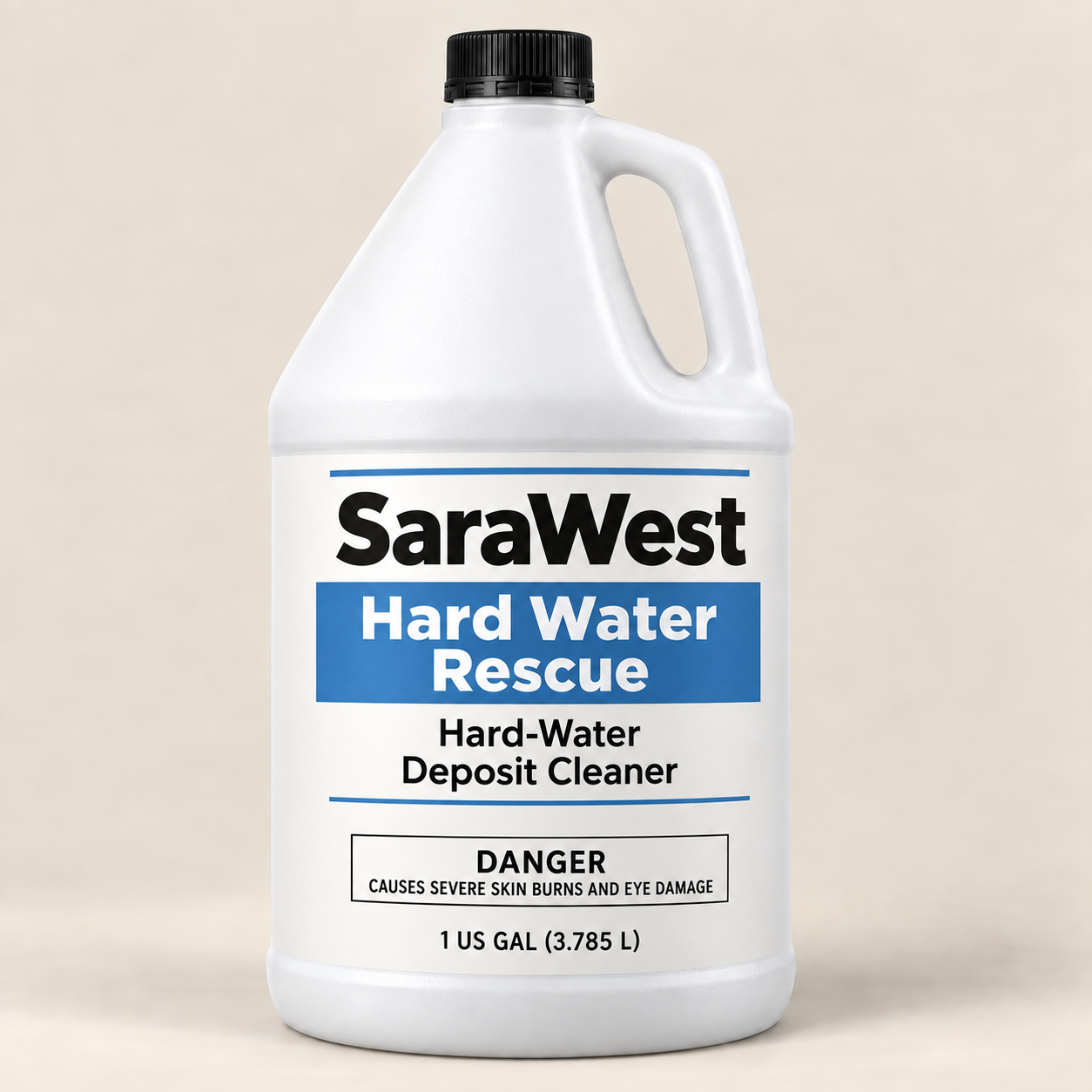
Hard-Water Deposit Cleaner
For hard-water deposits around the home and property.
See the product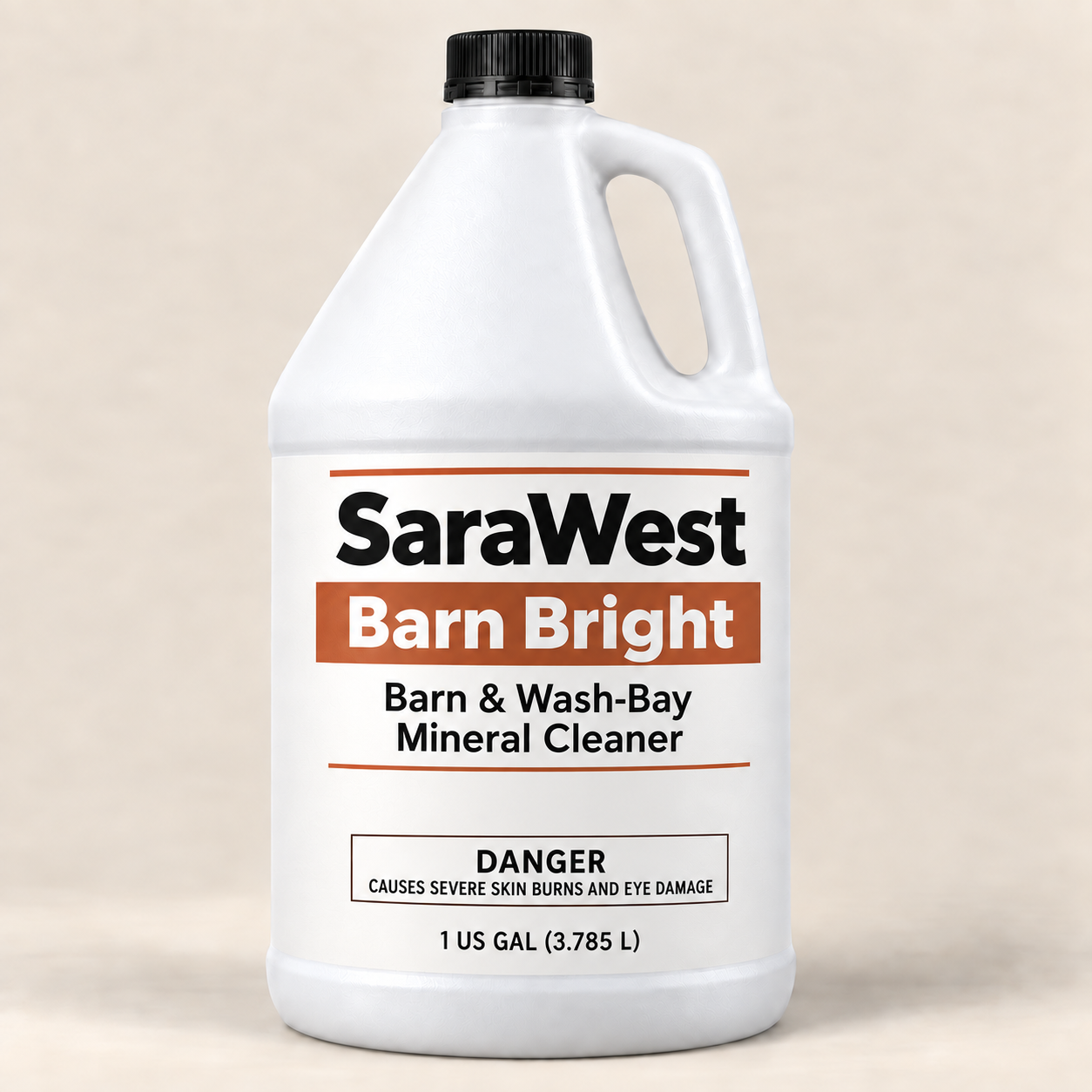
Barn & Wash-Bay Mineral Cleaner
For working barns, wash areas, and compatible equipment.
See the product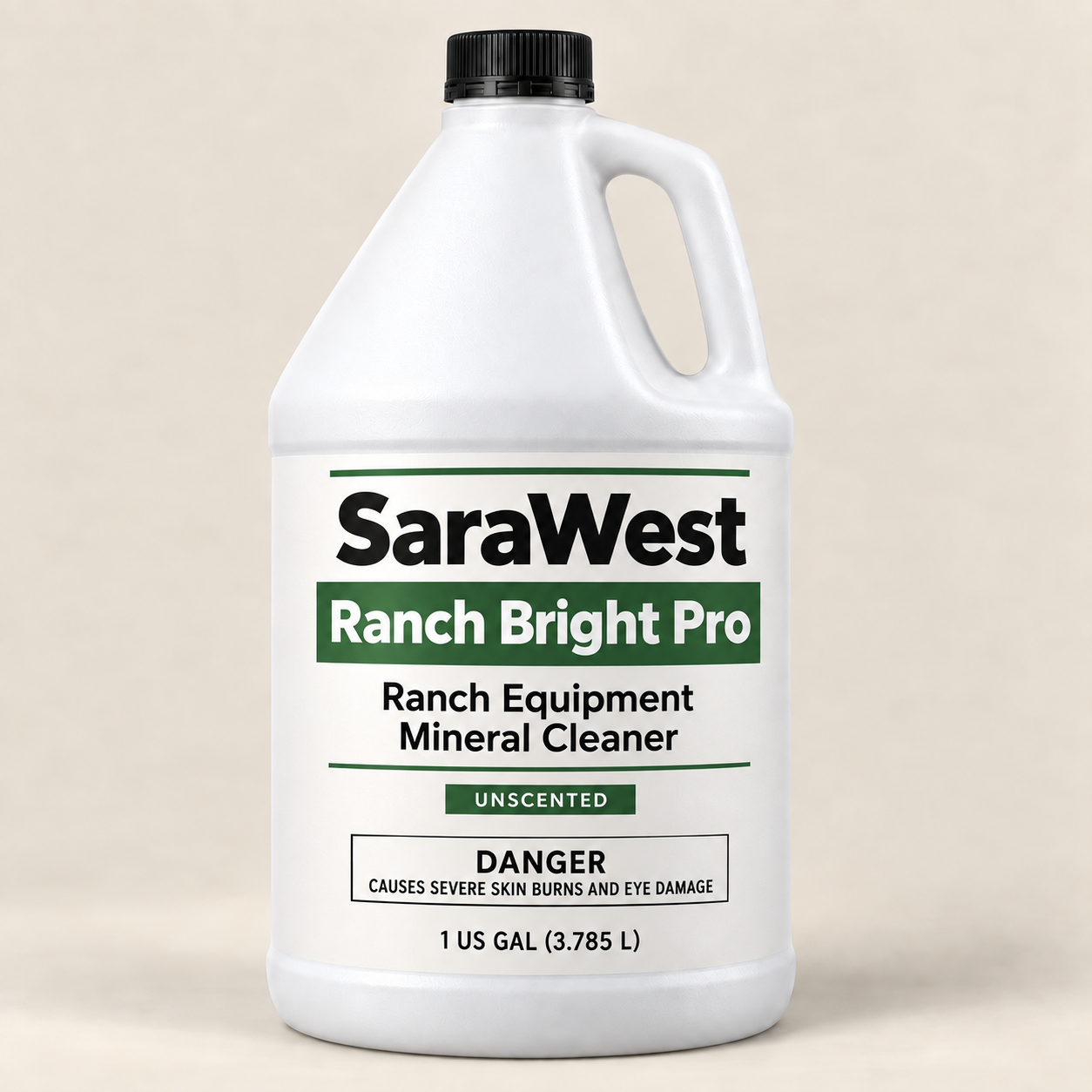
Ranch Equipment Mineral Cleaner
For ranch equipment maintenance and commercial supply.
See the product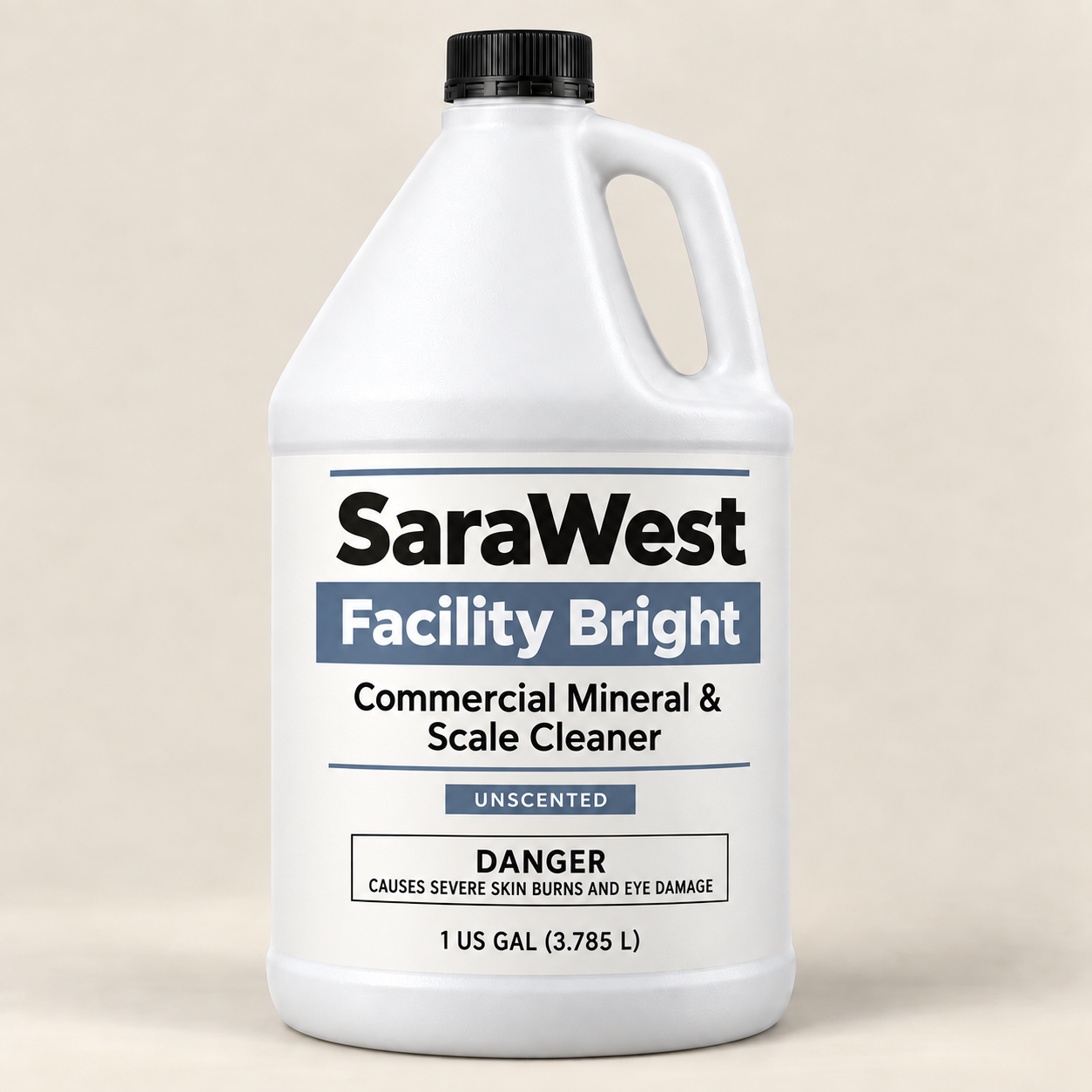
Commercial Mineral & Scale Cleaner
For scheduled mineral cleaning across commercial facilities.
See the product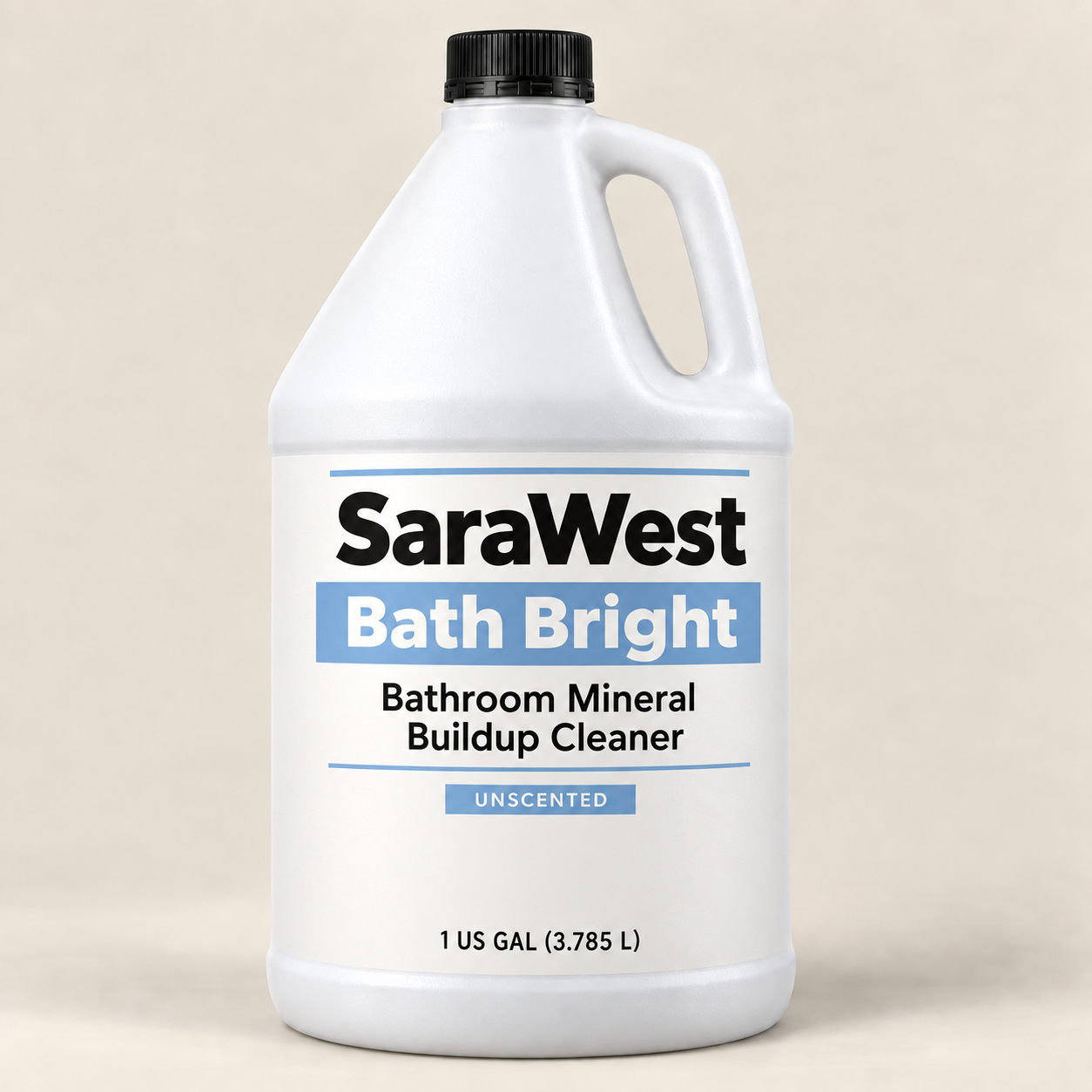
Bathroom Mineral Buildup Cleaner
For housekeeping teams and guest-property maintenance.
See the product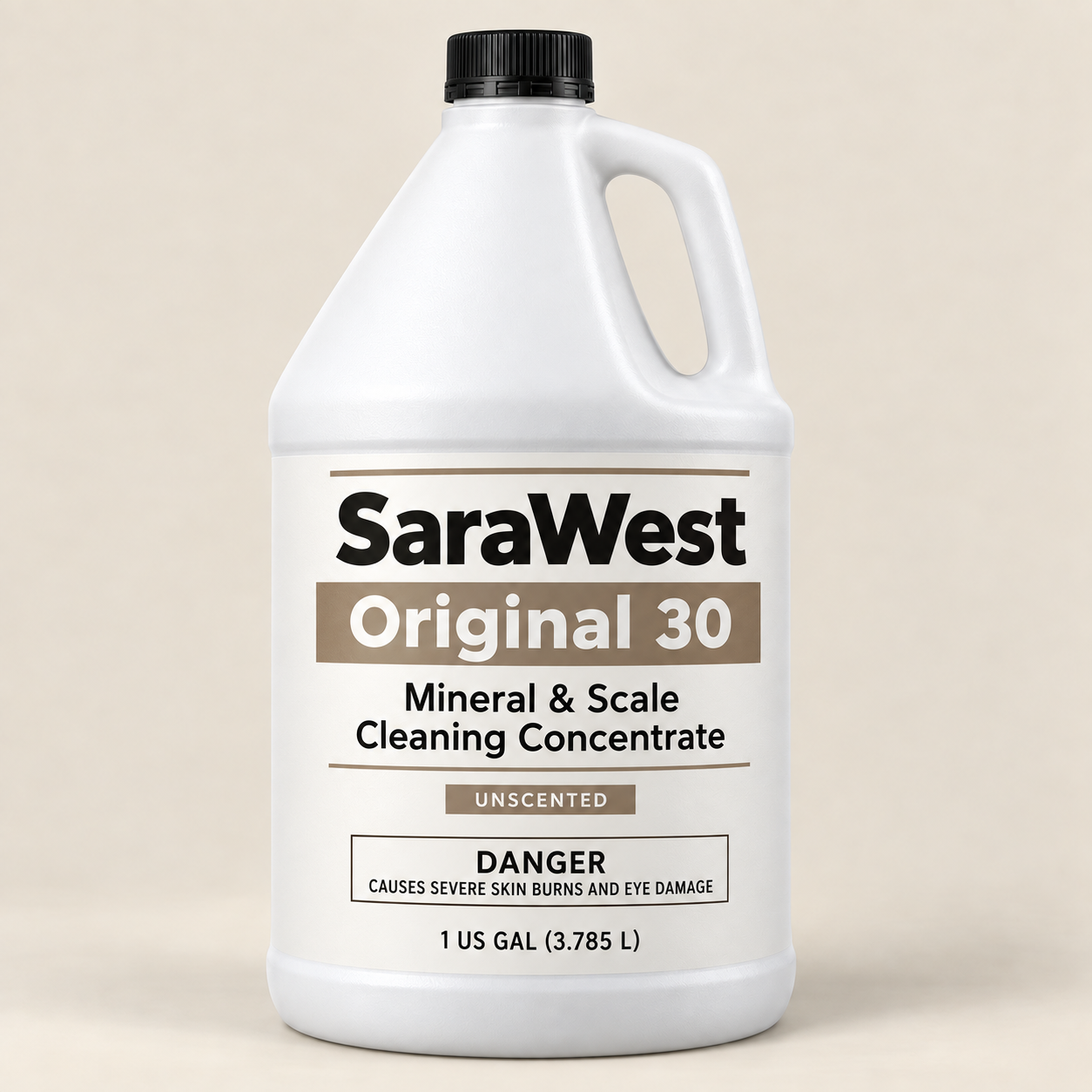
Mineral & Scale Cleaning Concentrate
For buyers who know their concentrate requirements.
See the product